


Your coffee is on the table, you take your first sip, and suddenly it's there: that brief, sharp pain in a tooth. Perhaps you even wince for a moment, wait a second, and try again. And indeed, that exact same spot makes itself known again. Yesterday, there was nothing there. You didn't notice anything while brushing your teeth this morning, either. Why is this one tooth suddenly reacting to heat?
Many people first associate sensitive teeth with ice, cold drinks, or a cold draft. However, heat can just as easily cause a tooth to suddenly become noticeable. Especially when only a single tooth is affected, you should observe more closely when the sharp pain occurs and how quickly it disappears. This is because there can be very different causes behind such sensitivity to temperature. Some of these can be explained by increased sensitivity, while others are better addressed by your dentist.
In this article, we explain why a tooth can suddenly react to hot coffee or tea, what changes might be behind it, and how you can take particularly gentle care of sensitive teeth in your daily routine.
Your tooth reacts to heat? There is often more behind it than just “too hot”
A sensitive tooth is, first and foremost, a signal from your body. This does not automatically mean that something serious is behind it. However, it does show that a temperature stimulus is reaching an area that was apparently better protected until now.
Beneath the hard enamel is the dentin. It is permeated by many tiny tubules. As long as these areas are protected by enamel and gums, you usually don't notice anything. However, if the dentin is exposed in one spot or if its protective environment is compromised, temperature stimuli can be transmitted more easily. The hot coffee is then not just perceived as warm; the tooth responds with a brief, sharp pain or a stinging sensation.
This can happen, for example, if the gums have receded slightly, leaving a sensitive tooth neck exposed. Stressed tooth surfaces can also play a role. Acidic foods and drinks, vigorous scrubbing while brushing, or consistently high pressure on the teeth can burden the natural protective structures over time.
And that is exactly why it sometimes feels as if the sensitivity appeared overnight. The change itself may have been developing for some time. The hot coffee is simply the moment you notice it for the first time.
What happens afterward is crucial. Is the sharp pain very brief and gone immediately? Does it happen every time at the same spot? Or does the pain linger even though the coffee has long since been finished? These differences are precisely what help you assess whether it might be temporary sensitivity or whether your dentist should take a look at the affected tooth.
Exposed dentin, enamel, or a filling: Where does the sharp pain come from?
When a tooth reacts to heat, the cause cannot always be identified from the outside. That is exactly what makes the situation sometimes so irritating. The tooth looks completely normal in the mirror, there is nothing unusual when brushing, and yet it reliably signals as soon as hot coffee or tea reaches the corresponding spot.
A common cause is exposed tooth necks. If the gums recede somewhat, a part of the natural protection is missing at that spot. The underlying dentin reacts more sensitively to external stimuli. Not only heat and cold can become unpleasant; some people also notice the spot when consuming sweet or acidic foods.
Tooth enamel can also play a role. Although it is one of the hardest substances in our body, it is not invulnerable. Frequent exposure to acid can change its surface over time. Those who brush their teeth vigorously immediately after acidic foods or drinks can additionally cause mechanical stress to the temporarily more sensitive surface.
In the case of a single tooth, other causes are also possible. For example, an older filling may have changed or may no longer fit optimally at its edge. Even a small defect in the tooth, cavities, or a fine crack can lead to temperature stimuli being perceived more intensely. You can hardly judge such changes reliably yourself.
That is precisely why the question “Why is this one particular tooth reacting?” is more important than whether the coffee was simply too hot. If the reaction always repeats at the same spot, you should not ignore it permanently.
A tooth reacts to heat: When should you take a closer look?
Not every brief, sharp pain means that treatment is immediately necessary. Nevertheless, it pays to pay attention to the nature of the discomfort. A brief stimulus that disappears immediately after contact with the hot drink is clearly different from a throbbing or persistent pain.
You should become particularly attentive if the sensitivity is new and persists for several days. The same applies if the tooth reacts increasingly strongly to heat or if it also hurts when chewing and biting. Spontaneous pain without a recognizable trigger should also be clarified by a dentist.
The duration of the reaction is also interesting. If the sharp pain disappears immediately, a sensitive or exposed tooth surface may be involved, for example. If the pain lasts significantly longer, another cause could be behind it. However, it is not possible to reliably determine what that is based on the feeling alone.
Therefore, do not try to diagnose a single sensitive tooth yourself. However, you can monitor it very well. When does the pain occur? Does the tooth react only to heat, or now also to cold, sweets, or pressure? Is it getting worse? Such information can be helpful during the dental examination.
By the way, you do not need to clean the affected tooth particularly vigorously until it is clear what is behind the sensitivity. The opposite is more sensible. Applying more pressure when brushing does not make a sensitive tooth cleaner, but it can put additional strain on sensitive areas. Thorough and yet as gentle as possible oral care is the better strategy now.
What you should do differently regarding oral care now
If a tooth suddenly reacts sensitively, the impulse to clean this spot particularly thoroughly often arises. You might suspect plaque there or simply want to ensure that the tooth is truly clean. However, more pressure is not a good idea in this situation. Especially not if an exposed tooth neck or an already sensitive tooth surface is behind the sharp pain.
Therefore, when brushing your teeth, make sure not to scrub. Even a toothpaste with highly abrasive components is not necessarily the best choice for sensitive tooth surfaces. Daily cleaning should reduce bacterial plaque as thoroughly as possible without placing unnecessary mechanical strain on teeth and gums.
It is also worth being a bit more attentive regarding acidic foods and drinks. Fruit juices, soft drinks, citrus fruits, or wine can temporarily make the enamel more sensitive to mechanical stress. Grabbing your toothbrush vigorously immediately afterward is therefore not a good combination. Water can initially help to rinse food particles and acids out of your mouth. It is better to wait a while before brushing your teeth.
You don't have to automatically cut hot coffee or tea out of your daily routine because of a brief sharp pain. However, you should avoid extremely high temperatures for the time being if you already know that the tooth reacts to them. This does not eliminate the cause, but it does prevent you from repeatedly exposing that same sensitive spot to an unpleasant stimulus.
If the sensitivity persists, the search for the cause still belongs in the dental practice. Gentle dental care can support a sensitive tooth in daily life, but it cannot replace a necessary dental diagnosis or treatment.
Why ultrasonic oral care is an interesting option for sensitive teeth
Especially with sensitive teeth, the question often arises as to how thorough cleaning can work without constantly brushing vigorously over the tooth surfaces. Here, ultrasonic oral care can be an interesting option for daily oral hygiene.
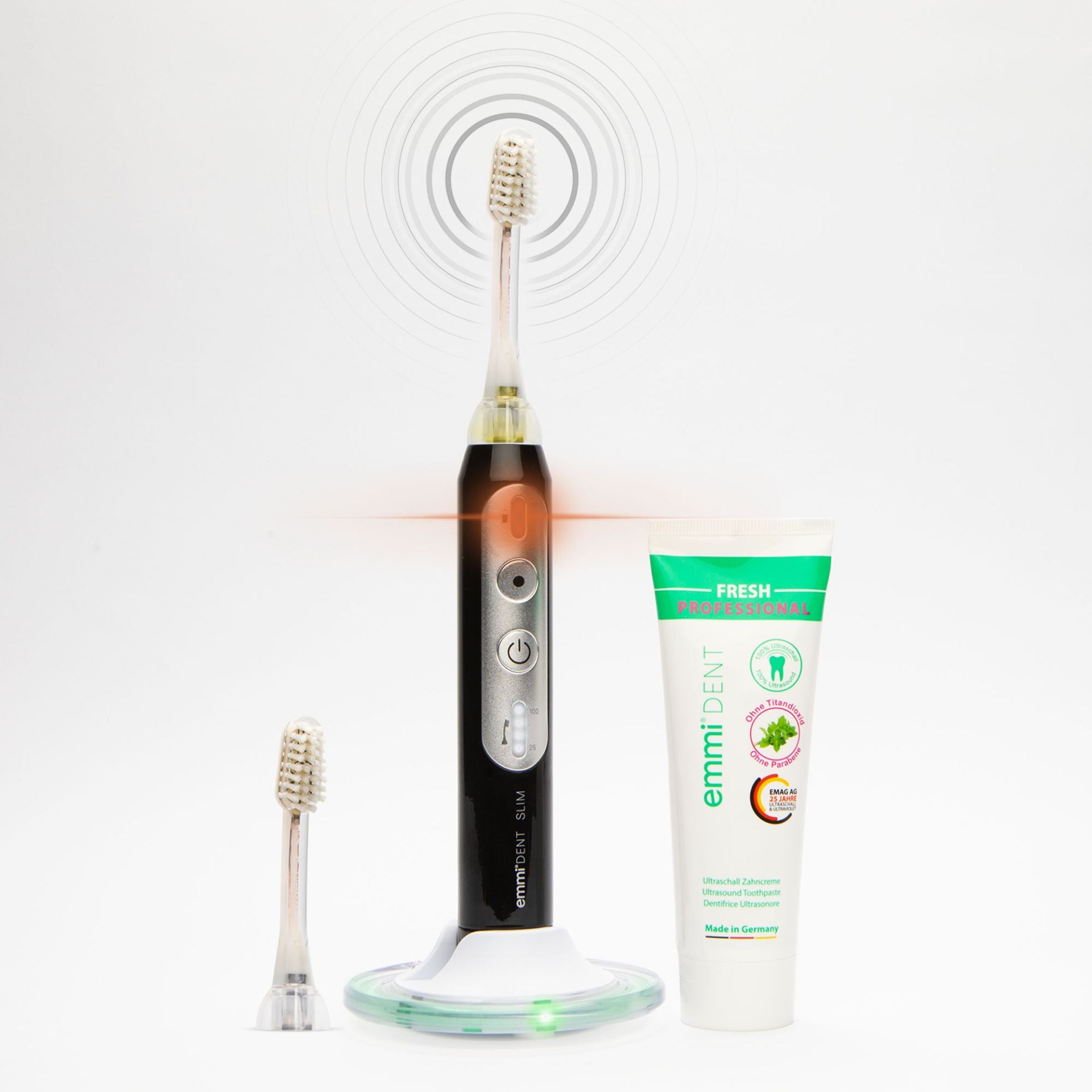
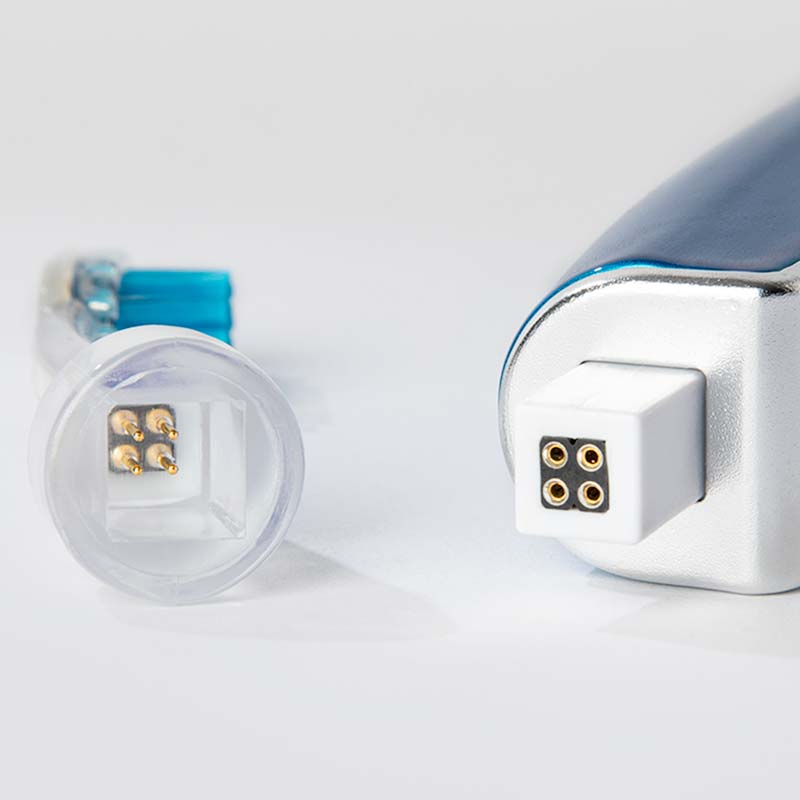
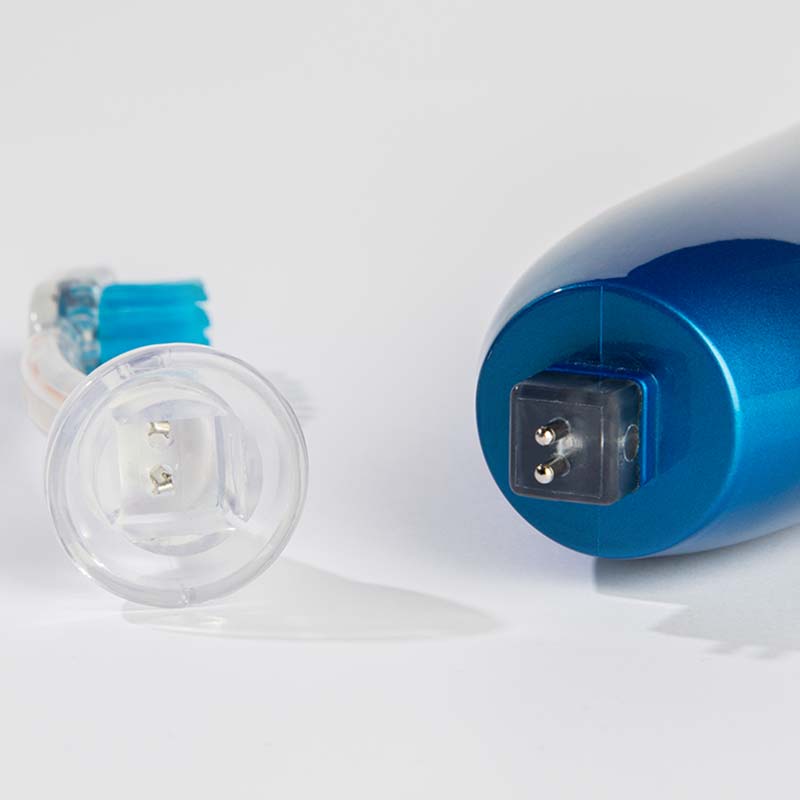
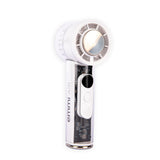
Our emmi-DENT ultrasonic toothbrushes work differently than toothbrushes whose cleaning effect is primarily generated by mechanical brushing movements. With ultrasonic technology, up to 96 million multi-frequency vibrations per minute are generated. Together with the special ultrasonic toothpaste, microscopic bubbles are created in the mouth. Our emmi-DENT ultrasonic technology is designed to support daily cleaning without requiring vigorous scrubbing on the teeth.
This can be particularly pleasant when individual tooth surfaces or tooth necks react sensitively to mechanical stimuli. The brush is held against the teeth with only light contact and guided section by section. Even here, more pressure does not mean more cleanliness.
Nevertheless, the cause of the sensitivity remains important. An ultrasonic toothbrush can support your daily oral hygiene and help reduce bacterial plaque. However, it does not treat exposed tooth necks, defective fillings, cavities, or other diseases. If a single tooth repeatedly makes itself known when exposed to heat, the reason for its sensitivity should be clarified.
Perhaps it will stay at just that one surprising sharp pain during your morning coffee. Perhaps you will encounter the feeling again the next day. Then it is worth not just blaming the temperature of the drink for it. Your tooth is making you aware of a change, the cause of which can be very different.
Therefore, observe when and how long the sensitivity occurs, continue to clean the area thoroughly but gently, and have recurring or intensifying discomfort clarified by a dentist. This way, you won't have to drink your coffee lukewarm as a precaution in the future, but will instead know what is behind your tooth's reaction.