





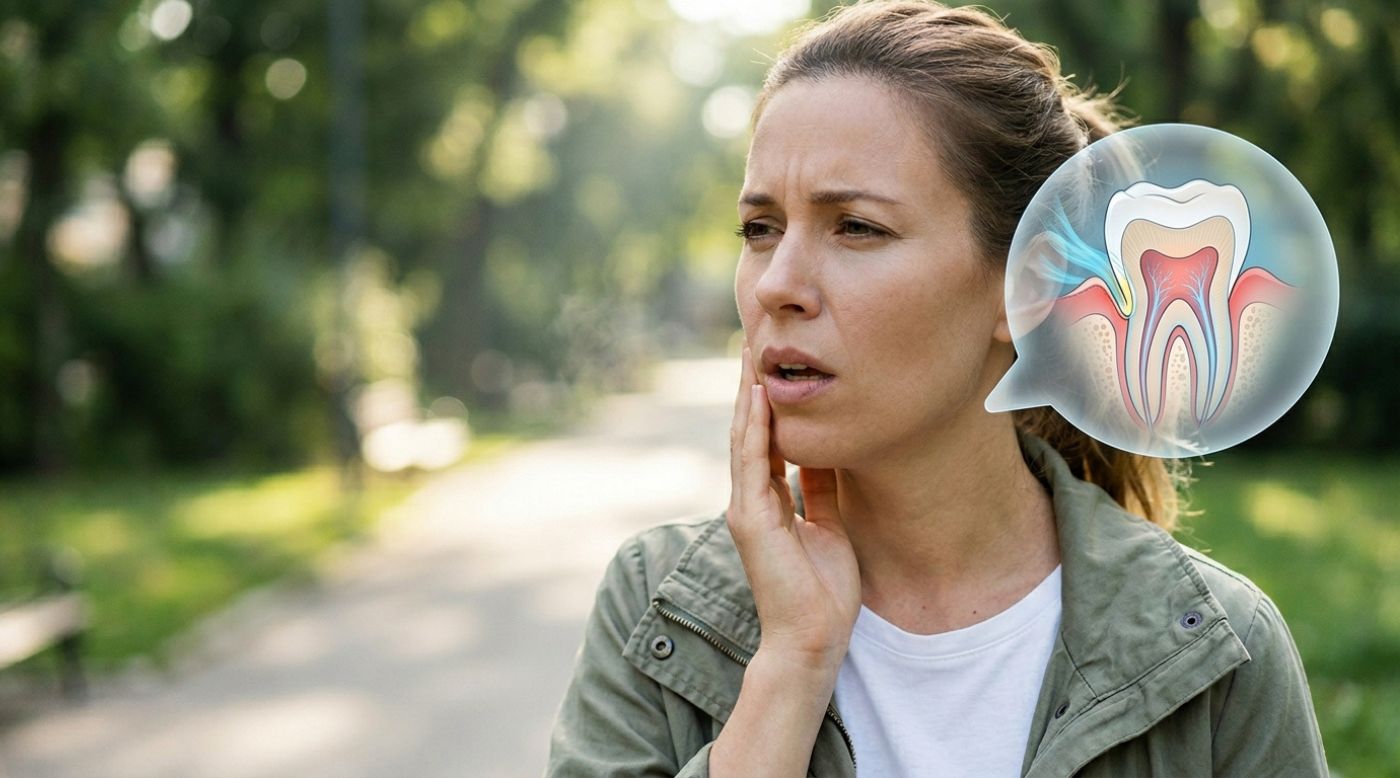
Perhaps you know the feeling: you step outside on a cooler morning, take a deep breath, and suddenly an unpleasant sensation shoots through one or more teeth. Sometimes even a slight draft while speaking, cycling, or walking is enough. The discomfort often appears surprisingly, and many affected individuals wonder why their teeth suddenly react to air, even though there were no problems before.
In fact, this form of hypersensitivity is one of the more common complaints in the oral cavity. The cause is usually not the air itself, but rather that certain areas of the tooth have become more sensitive, allowing external stimuli to be transmitted more easily to the tooth's interior.
Sensitive teeth are not automatically an indication of a serious illness. However, they often show that the tooth's natural protective mechanisms should be examined more closely. Knowing the causes can help to specifically reduce many everyday stresses and support oral health in the long term.
In this article, we explain why teeth can suddenly react sensitively to air, what changes are often behind it, and how you can gently care for your teeth in everyday life.
Why do teeth suddenly react to cold air?
Our teeth are normally well protected from external influences. The visible crown of the tooth is surrounded by a hard layer of enamel. This protects the more sensitive areas inside the tooth from temperature differences, acids, and mechanical stimuli.
However, if this protective layer changes or if sensitive tooth areas are exposed, stimuli can be perceived much more strongly. Cold air is one of the most common triggers. When inhaling, a rapid temperature change occurs on the tooth surface. If this stimulus reaches the fine tubules inside the tooth, the typical short sharp pain can occur.
Many people initially notice these complaints only occasionally. For example, when cycling, walking on a cooler morning, or staying in air-conditioned rooms. Over time, however, the reactions can occur more frequently if the underlying cause persists.
Individual teeth are particularly often affected. This is because sensitivity is often due to localized changes. These include, for example, exposed tooth necks, small enamel defects, or areas that are subjected to greater stress by external influences than others.
The air itself does not harm the teeth. It merely reveals that sensitive structures react more strongly to temperature stimuli than normally intended.
What role do exposed tooth necks and tooth enamel play?
When teeth react to air, exposed tooth necks often play a particularly important role. Normally, the transition between the tooth and the gums is protected by the gums. However, if the gums recede, areas that are not protected by the resistant tooth enamel become visible. These areas react significantly more sensitively to temperature differences and other external stimuli.
Exposed tooth necks can have various causes. Excessive pressure when brushing teeth, gum inflammation, or age-related changes often contribute to this. Nighttime teeth grinding can also increase the stress on tooth structures and contribute to greater sensitivity in the long term.
In addition to the gums, tooth enamel also plays an important role. Although it is the hardest substance in the human body, it can be stressed over time. Acidic drinks, frequent snacks, fruit acids, or certain eating habits can contribute to weakening the protective function of tooth enamel. The result is not necessarily visible damage. Often, only increased sensitivity to cold, sweet, or air initially appears.
Many affected individuals initially only perceive these signals occasionally. This is precisely why they are often underestimated. However, sensitive reactions can provide valuable clues that the protective structures of the teeth are being stressed more than usual. Early attention can help to avoid further stress and maintain oral health in the long term.
Which everyday habits can exacerbate the symptoms?
In addition to the actual causes, there are numerous everyday habits that can further irritate sensitive teeth. Often, these are behaviors that have become routine over the years and whose effects on the tooth surfaces are hardly perceived.
A common factor is brushing teeth too vigorously. Many people associate strong pressure with a more thorough cleaning. In fact, consistently high pressure can stress gums and tooth surfaces. Especially in the area of the tooth necks, this can sometimes lead to small abrasions that can later cause sensitivities.
Acidic foods and drinks also play a role. Fruit juices, lemon water, soft drinks, or energy drinks can temporarily make tooth surfaces more sensitive. If teeth are brushed immediately afterwards, the stress is additionally increased because tooth enamel is initially somewhat more susceptible after contact with acid.
In addition, there are external influences such as air conditioning or strong headwind when cycling. Although these factors do not cause the actual cause, they can make existing sensitivities much more noticeable.
Stress should also not be underestimated. Many people unconsciously clench or grind their teeth at night. This exerts high forces on the tooth surfaces for hours. In the long term, this can contribute to increased wear and tear on tooth enamel and tooth necks.
Those who notice sensitive teeth often benefit from critically questioning their own habits. Hypersensitivity often does not arise from a single trigger, but from the interaction of several factors over a longer period of time.
How can you gently care for sensitive teeth?
When teeth react to air, one thing is particularly important in daily oral care: to put as little additional strain on sensitive areas as possible. Many affected individuals initially try to avoid the painful areas when brushing. In the long term, however, this is not a good solution, as bacterial plaque can accumulate particularly easily there.
More important is a thorough but gentle cleaning. This depends not only on the toothpaste, but also on the toothbrush used and the brushing technique. Too much pressure can additionally irritate sensitive areas. Therefore, many experts recommend cleaning teeth with the gentlest possible movements and avoiding aggressive scrubbing.
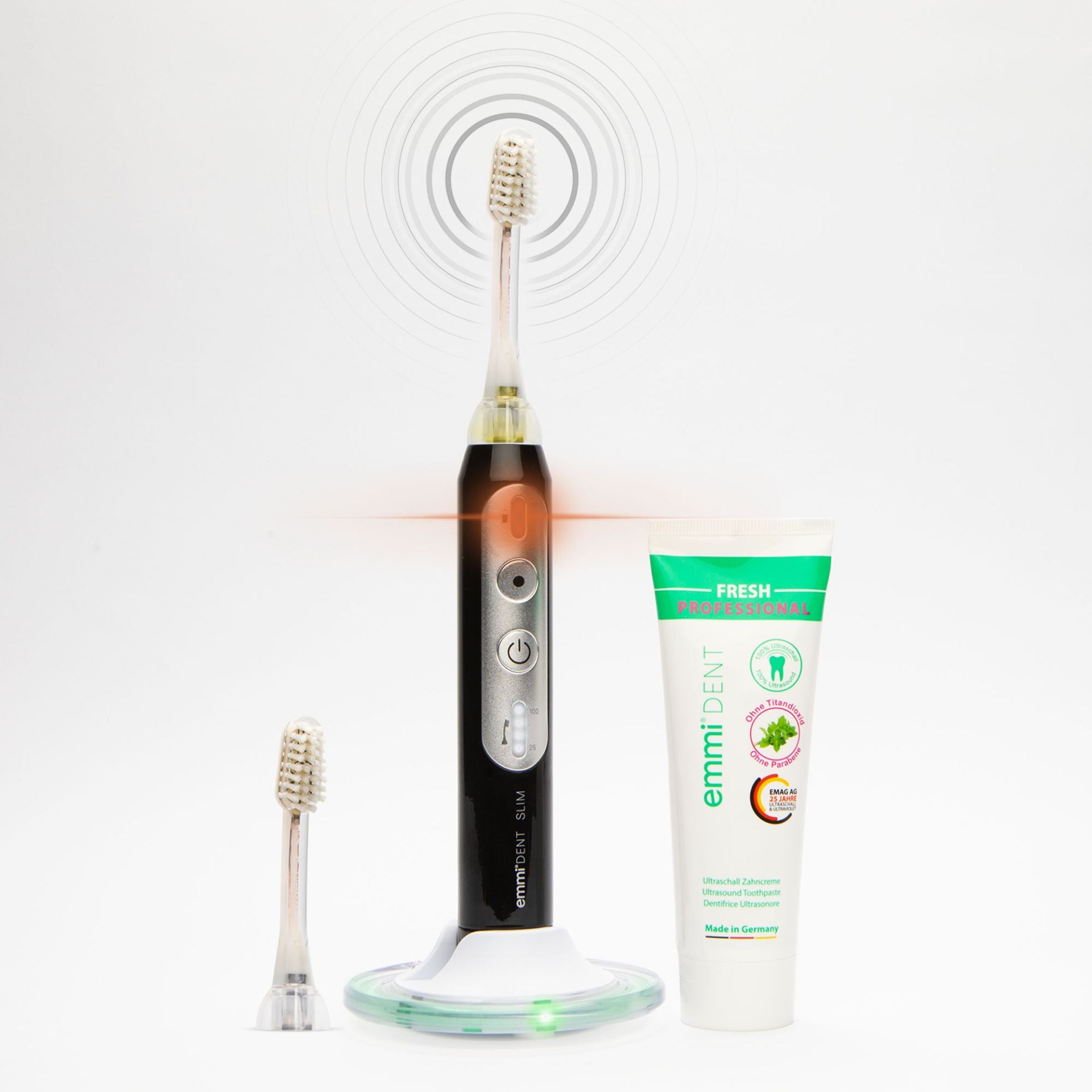
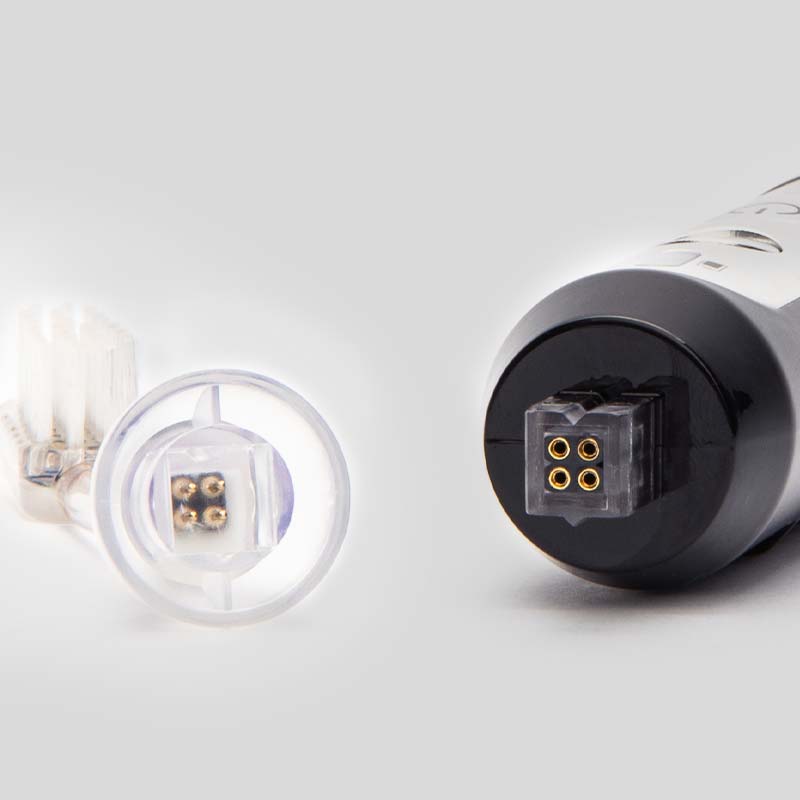
In this context, many people are interested in the differences between our emmi-dent sonic toothbrushes and our emmi-dent ultrasonic toothbrushes. Our classic emmi-dent sonic toothbrush primarily cleans through rapid mechanical brush movements. Our emmi-dent ultrasonic toothbrushes, on the other hand, work with ultrasonic technology and require significantly less mechanical movement on the tooth surface.
Our emmi-dent Slim ultrasonic toothbrush is used by many users as a supportive measure when sensitive tooth surfaces need to be cared for as gently as possible. It can help to reduce bacterial plaque and is particularly valued by people who place great importance on gentle cleaning in daily oral care. Nevertheless, even here it applies: good oral hygiene can support oral health, but it does not replace a dental diagnosis or treatment.
In addition to dental care, diet also plays a role. Sufficient hydration, a conscious approach to acidic foods, and regular dental check-ups can help to support the natural protective mechanisms of the teeth in the long term.
When should you have the cause clarified by a dentist?
Occasional sensitivities to cold air are not uncommon. However, if the complaints occur more frequently or become stronger over time, the cause should be investigated more closely.
Sensitive teeth can indicate various changes. In addition to exposed tooth necks, small enamel defects, incipient tooth decay, leaky fillings, or gum problems may also be considered. These changes are often not visible from the outside. A dental examination helps to determine the exact cause and initiate appropriate measures.
You should be particularly attentive if the symptoms persist for several weeks, if individual teeth are permanently affected, or if pain occurs additionally when eating and drinking. Gum bleeding, swelling, or visible changes to the gums should also be clarified.
The sooner the cause is identified, the better further stress can be avoided. Many problems can be treated much more easily at an early stage than after a longer period of time.
If your teeth suddenly react to air, there is often no single cause behind it. Often, several factors work together, such as exposed tooth necks, stressed tooth enamel, or everyday habits that additionally irritate sensitive areas. Those who take the warning signs seriously and adjust their oral care accordingly can do a lot for long-term dental health. If the complaints persist or increase, a dental examination provides clarity and helps to identify the actual cause.