











In this article, we explain why bad breath is common in the morning, what causes it, and when a closer look is advisable.
Many people know the situation: after waking up, their mouth feels dry and their breath is noticeably more unpleasant than during the day. This feeling often disappears after brushing teeth, eating breakfast, or drinking a glass of water. Therefore, morning bad breath is usually considered completely normal.
Indeed, a certain amount of bad breath after a night's sleep is often no cause for concern. During sleep, conditions in the mouth change significantly. Saliva production decreases, bacteria can multiply more easily, and the natural cleaning function of saliva works less intensively than during the day.
Nevertheless, it is worth taking a closer look. Not all bad breath has the same cause. While some forms are merely related to natural processes during the night, others can indicate changes in oral health. Knowing the differences can help you better assess when everything is within the normal range and when an examination might be useful.
Why does bad breath occur overnight?
While we sleep, the body produces significantly less saliva than during the day. This natural reduction is completely normal. However, it temporarily restricts the self-cleaning of the mouth.
Saliva performs numerous tasks for oral health. It rinses away food debris, helps control certain bacteria, and helps maintain balance in the mouth. When less saliva is produced, bacteria can multiply more easily. This produces metabolic products that are often responsible for the typical morning bad breath.
This effect is particularly noticeable when breathing through the mouth. The mucous membranes then dry out more, and the oral environment changes further. Many people therefore notice not only bad breath in the morning, but also a dry or furry feeling on the tongue.
The tongue itself also plays an important role. Bacteria and coatings can accumulate on its surface, which are more noticeable overnight. Therefore, bad breath often does not originate exclusively from the teeth, but to a significant extent from the tongue.
In many cases, this morning bad breath disappears after normal oral hygiene and the first fluid intake of the day. This is precisely why it is initially considered a natural consequence of the changes that occur in the mouth during sleep.
What causes can be considered besides nighttime breathing?
Even if reduced saliva production during sleep is considered the most common cause, there are other factors that can worsen morning bad breath. Often, several influences work together simultaneously.
Mouth breathing during the night plays an important role. Those who snore or breathe primarily through their mouth due to a blocked nose lose significantly more moisture in the oral cavity. This causes the mucous membranes to dry out more, and the conditions for odor-producing bacteria change.
In addition, eating and drinking habits also affect breath the next morning. Garlic, onions, certain spices, or alcohol can be noticeable for hours after consumption. Eating late immediately before going to bed can also contribute to more food debris and bacterial plaque remaining in the oral cavity.
Furthermore, smoking and nicotine consumption can affect the natural oral flora. At the same time, they further dry out the mucous membranes. Many smokers therefore report bad breath more frequently than non-smokers.
Certain medications can also play a role. Some drugs affect saliva production and lead to a drier mouth. This can change the conditions for odor-producing bacteria. Many affected people do not initially associate this connection with their bad breath.
Therefore, with regular bad breath, it is worthwhile not only to look at dental care, but also to consider possible influences from everyday life, diet, and health.
When can bad breath indicate problems in the oral cavity?
Morning bad breath is often harmless. It becomes more problematic if the unpleasant breath does not disappear after a short time or also occurs regularly during the day.
In many cases, the cause then lies directly in the oral cavity. Bacterial plaque on teeth, tongue, and gums are among the most common triggers. If these plaques are not removed regularly, larger amounts of odor-producing bacteria can accumulate.
Gum inflammation can also be associated with bad breath. Inflamed gums provide additional hiding places for bacteria and can contribute to a change in the oral environment. It is not uncommon for other signs such as bleeding gums, swelling, or sensitive gums to occur.
Cavities, leaky fillings, or hard-to-reach areas in the mouth can also play a role. In such areas, bacteria and food debris often accumulate, which can cause unpleasant odors.
Bad breath becomes particularly noticeable when it persists permanently despite thorough oral hygiene. In such cases, it is advisable to have the cause professionally investigated. This often makes it possible to determine whether the cause is actually in the oral cavity or whether other factors are involved.
What can you do about morning bad breath?
Most causes of morning bad breath can be positively influenced by consistent oral hygiene and a few simple habits. This is not just about cleaning the teeth. The tongue, interdental spaces, and adequate moistening of the oral cavity also play an important role.
Since less saliva is produced during the night, many people benefit from drinking a glass of water immediately after getting up. This moistens the mucous membranes and supports the natural cleaning function of the mouth.
Equally important is the regular removal of bacterial plaque. The tongue should not be forgotten here. A large part of the odor-producing bacteria is not on the teeth, but on the tongue surface. Therefore, thorough cleaning of the tongue can help reduce unpleasant odors.
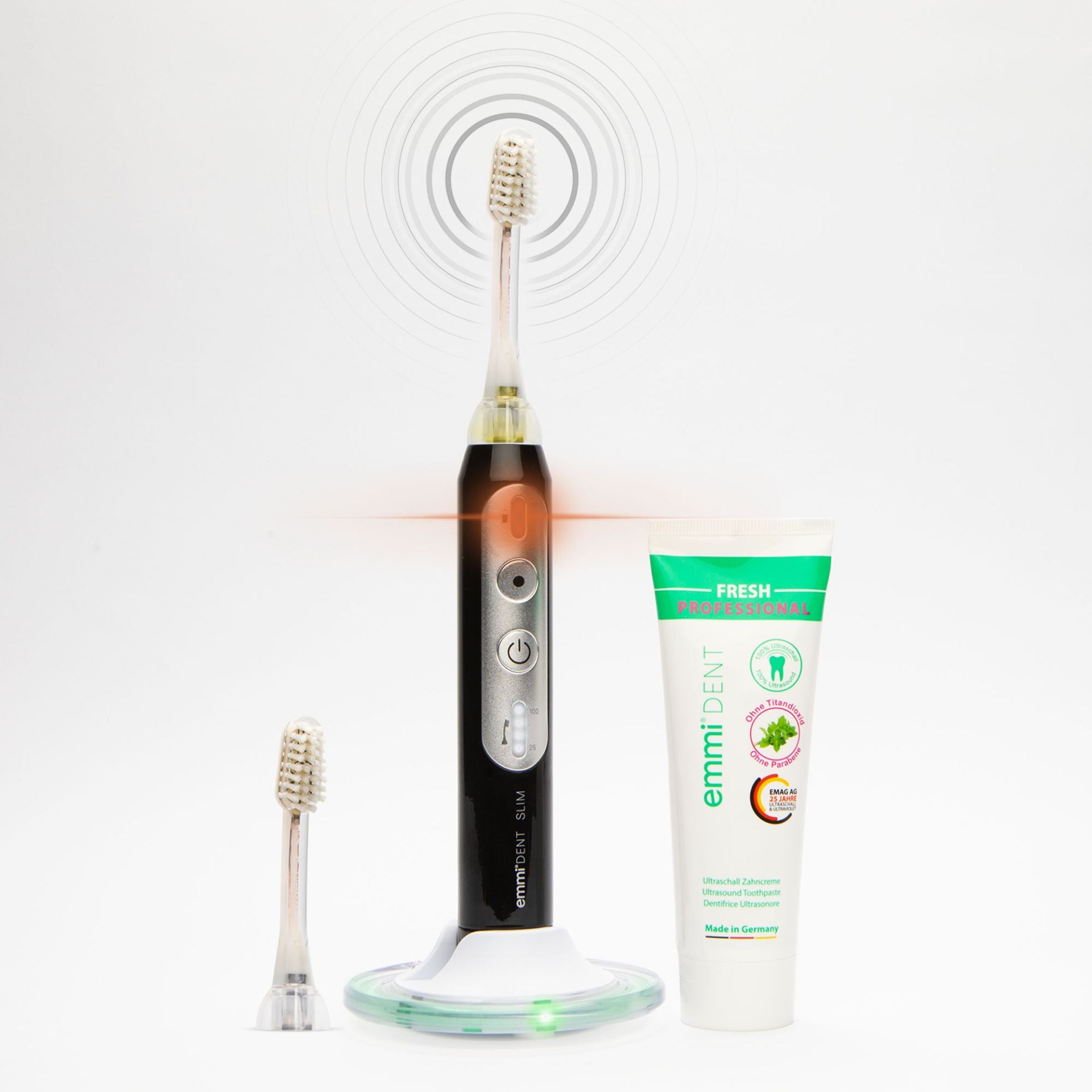
Daily dental care also remains an important part of prevention. Many people pay attention to cleaning methods that are as thorough as possible and at the same time gentle. Our emmi-dent Slim ultrasonic toothbrush is used by many users as a support to reduce bacterial plaque as part of daily oral care. In contrast to classic sonic toothbrushes, cleaning is not primarily carried out by fast mechanical brushing movements, but by ultrasonic technology. Regardless of the system used, regular cleaning of the interdental spaces and the tongue remains an important part of comprehensive oral hygiene.
In addition, sufficient drinking, a balanced diet, and avoiding late, heavily spiced meals can help reduce morning bad breath.
When should you have bad breath professionally checked?
Occasional bad breath after waking up is often part of the normal processes during the night. However, it is different if the unpleasant breath persists or is regularly noticeable during the day.
At the latest, if bad breath persists despite good oral hygiene, the cause should be investigated more closely. The same applies if additional complaints such as bleeding gums, swelling, sensitive teeth, or noticeable plaque occur.
A dental examination can help determine whether bacterial plaque, gum problems, cavities, or other changes in the oral cavity are involved. In some cases, however, the causes lie outside the oral cavity. Certain diseases, medications, or changes in salivary flow can also affect breath.
The sooner the cause is identified, the more targeted the appropriate measures can be. Many triggers are much easier to treat if they are detected early.
Morning bad breath is often a natural consequence of reduced saliva production during sleep. In most cases, it disappears after getting up, drinking, and normal oral hygiene. However, if the unpleasant breath persists or additional complaints occur, a closer examination is worthwhile. Those who pay attention to thorough oral care, sufficient fluids, and regular check-ups can do a lot to support long-term oral health and identify possible causes early.