









Most people primarily focus on their teeth when they look in the mirror. Gum changes, on the other hand, are often only noticed when they are already clearly visible. This is precisely what makes gum recession peculiar: it often develops slowly and usually causes no pain initially.
It is not uncommon for those affected to eventually notice that individual teeth suddenly appear longer than before or react more sensitively to cold drinks. Some discover small changes at the gumline but cannot initially interpret them correctly. Since the process often progresses insidiously, it often goes unnoticed for months or even years.
However, gums perform important tasks. They protect the sensitive areas around the tooth root and form a natural barrier against bacteria. If the gums recede, these protective functions can be impaired. Therefore, it is worthwhile to take early changes seriously and understand the possible causes.
In this article, we explain why gum recession often develops insidiously, what the first signs can be, and how you can protect your gums in the long term.
Why do gums recede in the first place?
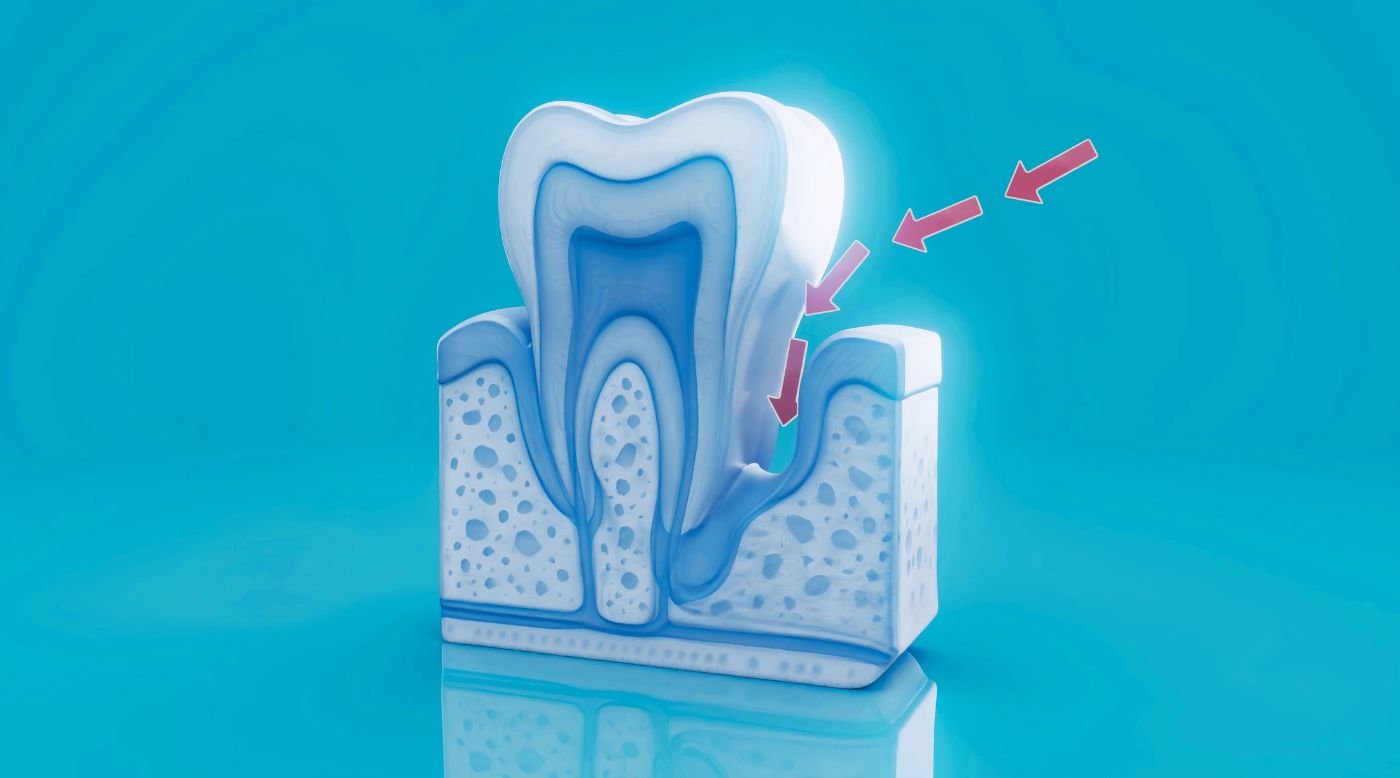
Gum recession means that the gumline slowly pulls away from the tooth surface. This exposes areas that are normally covered and protected by the gums. This particularly often affects the sensitive tooth necks and sometimes even parts of the tooth root.
This process usually does not happen suddenly. In many cases, various factors work together over a long period. Often, it is a combination of mechanical stress, individual predisposition, and changes in the oral cavity. Therefore, gum recession can rarely be attributed to a single cause.
Many people barely notice the changes initially. This is because the gums often recede millimeter by millimeter. It is only when the exposed areas react more sensitively to cold air, hot drinks, or sweet foods that the problem is perceived.
With increasing recession, the affected areas lose some of their natural protection. The exposed tooth necks do not have a protective enamel layer like the visible tooth crown. This means that external stimuli can be perceived more easily, and the teeth can react more sensitively.
Precisely because gum recession often develops slowly, regular check-ups are important. They help to detect changes early and identify possible causes in good time.
Which early warning signs should you take seriously?
Gum recession often causes no pain in the initial phase. This is precisely why it often goes unnoticed for a long time. Nevertheless, there are some signs that may indicate that the gums have already changed.
A common first sign is increasing tooth sensitivity. Suddenly, individual areas react more strongly to cold drinks, ice, hot foods, or even cold air. Many people initially suspect a problem with the tooth itself, although the cause may actually lie in receding gums.
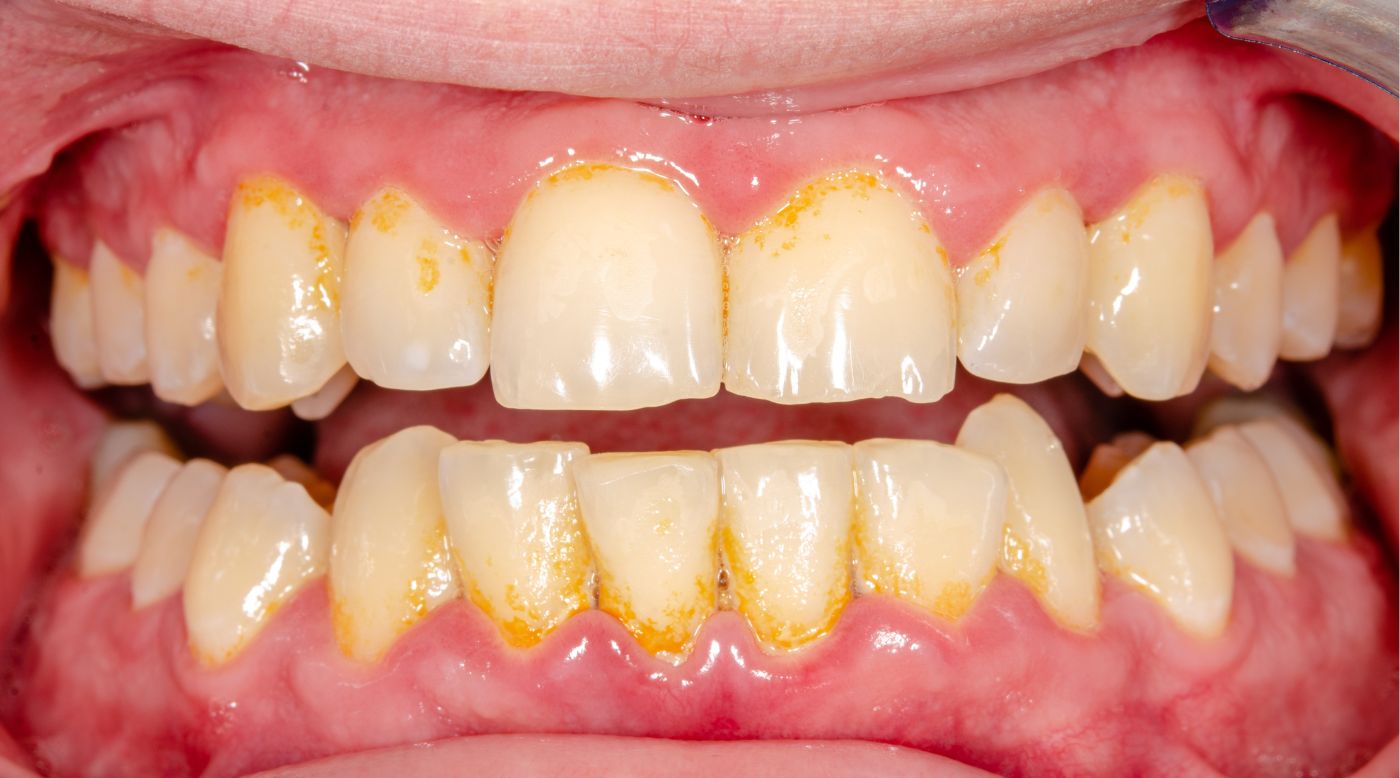
Visual changes can also provide clues. Some sufferers feel that individual teeth appear longer than before. In fact, a part of the tooth neck that was previously covered by the gums often becomes visible. This change usually develops slowly and is therefore often only noticed when comparing with older photos or during a dental check-up.
In addition, small indentations in the area of the tooth necks may become visible. These are not necessarily caused by gum recession alone but often occur together with exposed tooth necks. Occasional gum bleeding should also not be ignored, as it can indicate irritation or inflammatory processes.
Many people get used to these changes and consider them a normal part of aging. In fact, it is worthwhile to take even small changes seriously. The earlier possible causes are recognized, the better the gums can be protected in the long term.
What are the possible causes of gum recession?
Gum recession can have different causes. In many cases, several factors act on the gums simultaneously. Therefore, it is important to consider the possible triggers holistically.
A common reason is persistent excessive mechanical stress during brushing. Many people believe that vigorous scrubbing makes teeth particularly clean. In fact, excessive pressure can irritate the gums and contribute to their recession in the long term. Particularly hard bristles or an unsuitable brushing technique can further intensify this effect.
Gum inflammation also plays an important role. If bacterial plaque is not removed regularly, it can permanently irritate the gums. Over time, this can lead to changes that also affect the course of the gumline.
In addition, there are individual factors that cannot be fully influenced. The thickness of the gums, the position of the teeth, or genetic predispositions can contribute to some people being more susceptible to gum recession than others.
Further possible influencing factors include nocturnal teeth grinding, smoking, or heavy stress on individual teeth. Orthodontic peculiarities can also play a role. Therefore, gum recession often does not result from a single event but from long-term effects of various factors.
Those who know the possible causes can specifically ensure that avoidable stresses are reduced and the conditions for healthy gums are improved.
How can you protect your gums in everyday life?
Healthy gums primarily benefit from consistent yet gentle oral care. Many people focus exclusively on the teeth themselves when brushing and pay less attention to the gumline. Yet, an important part of oral health begins precisely there.
The correct brushing technique is particularly crucial. Too much pressure does not automatically lead to better cleaning. On the contrary: persistently vigorous scrubbing can additionally stress the gums and tooth necks. Therefore, many experts recommend gentle and controlled cleaning, where the tooth surfaces are thoroughly cleaned without unnecessarily irritating the tissue.
Regular removal of bacterial plaque also plays an important role. If these persist for a long time, they can irritate the gums and promote inflammatory processes. Good oral hygiene therefore helps to keep the gums healthy in the long term.
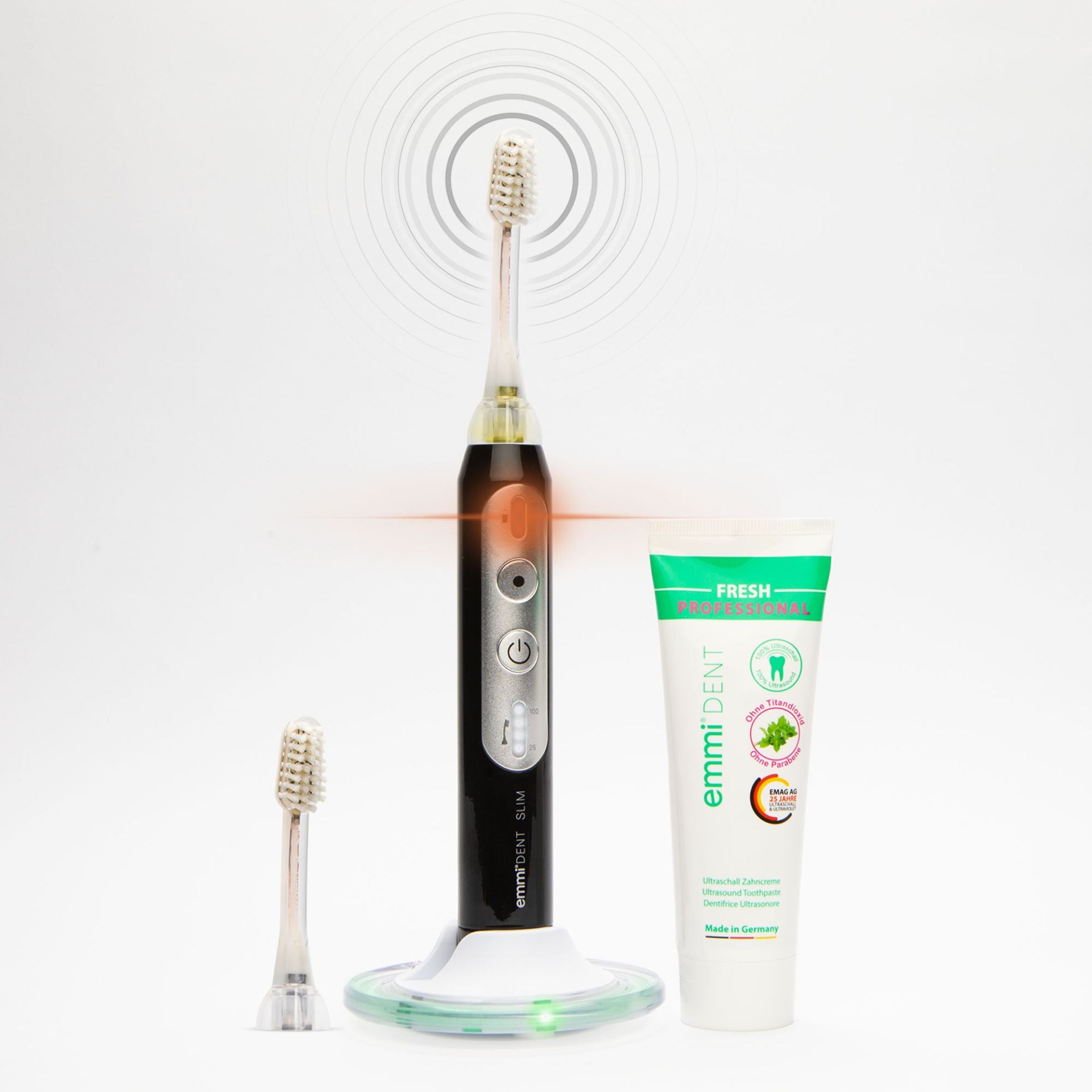
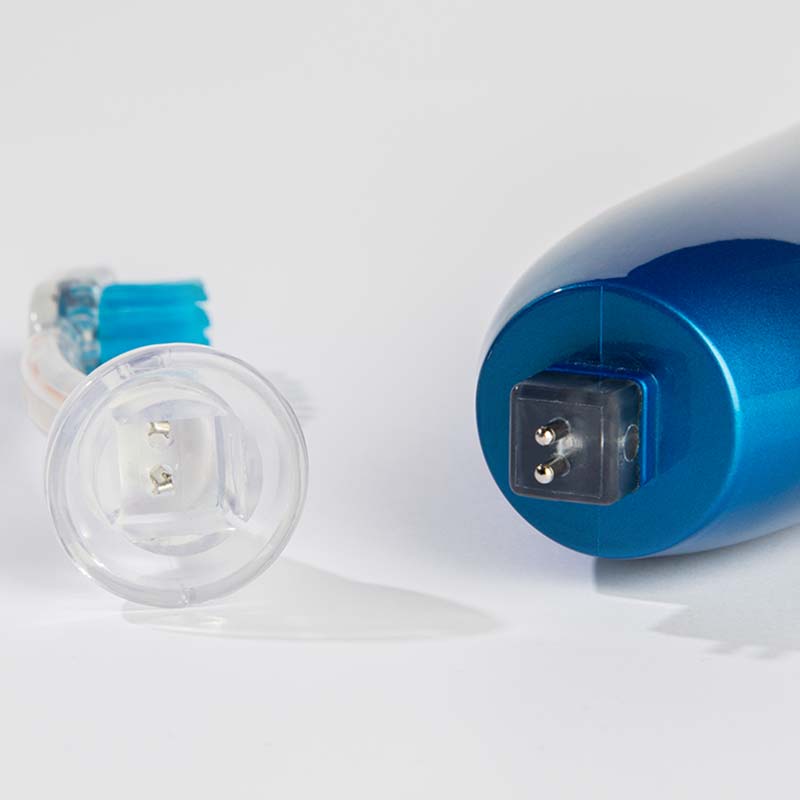
Many people are interested in the differences between our emmi-dent sonic toothbrushes and emmi-dent ultrasonic toothbrushes in this context. Classic sonic toothbrushes mainly clean through rapid mechanical brushing movements. Ultrasonic toothbrushes, on the other hand, work with ultrasonic technology and require significantly less mechanical movement on the tooth surface.
Our emmi-dent Slim ultrasonic toothbrush is used by many users as a supportive measure when particularly gentle cleaning is a priority. It can help reduce bacterial plaque and is often used by people who want to care for sensitive gums or exposed tooth necks particularly carefully. Nevertheless, it remains important: ultrasound does not replace dental treatment and cannot eliminate existing causes of gum recession.
In addition, regular check-ups and a balanced diet support long-term oral health. Often, it is many small measures that together have a positive influence on the gums.
When should you seek dental advice?
Since gum recession usually progresses insidiously, it is often only noticed at a more advanced stage. It is therefore all the more important to have changes assessed early.
At the latest, if individual teeth appear significantly longer than before or react sensitively to temperature stimuli, a dental examination should be carried out. The same applies to regular gum bleeding, swelling, or visible changes at the gumline.
A professional examination helps to better classify the cause. It can be determined whether bacterial plaque, inflammation, mechanical stress, or other factors are responsible for the changes. The earlier possible triggers are identified, the better further damage can often be avoided.
Regular preventive examinations also offer the opportunity to document even small changes. Many forms of gum recession develop slowly. Therefore, they are often less noticeable in everyday life than when comparing them over several years.
Gum recession usually does not happen overnight. It often develops over a longer period and initially goes unnoticed. Early signs such as sensitive tooth necks, seemingly longer teeth, or occasional gum bleeding should therefore be taken seriously. Those who pay attention to gentle oral hygiene, consistently reduce bacterial plaque, and attend regular check-ups can do a lot for their gum health. If changes are detected early, possible causes can often be much better classified and specifically accompanied.