












Gums are something that often receive little attention in everyday life. As long as they don't hurt or visibly stand out, they are quickly taken for granted. But this is precisely where one of the biggest challenges lies. Changes in the gums often begin insidiously. They are barely visible at first, rarely painful, and therefore easily overlooked.
In this article, we explain how your gums change with periodontitis, why these changes should not be ignored, and what role your daily care plays. You will gain a clear understanding of what happens in your mouth and how you can react meaningfully without falling into unnecessary uncertainty.
Because periodontitis is not a sudden event. It is a process. And that's precisely why it's worth understanding it.
What happens to the gums with periodontitis
When periodontitis of the gums is mentioned, it is not just about a simple inflammation. It is a change in the entire tissue around your teeth. Your gums are just the most visible part of a complex system consisting of connective tissue, bone structure, and the supporting apparatus.
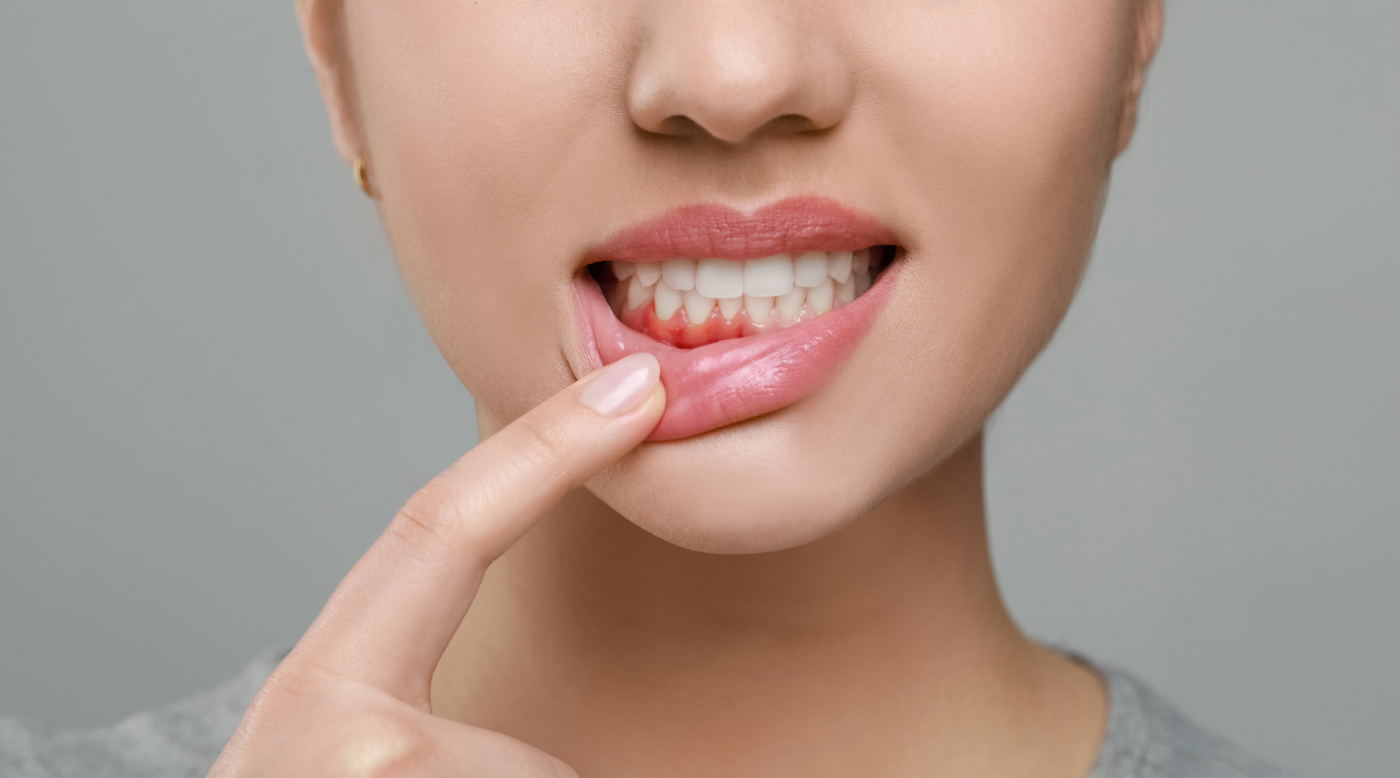
At the beginning, there is usually a seemingly harmless reaction. Your gums might appear slightly reddened, more sensitive than usual, or start bleeding slightly when brushing your teeth. These early signs are often underestimated because they are not immediately associated with a serious problem.
But this is exactly where the development begins. If bacteria accumulate along the gum line and remain there, your body reacts with inflammation. This inflammation is initially a protective reaction. Your immune system tries to control the bacteria.
However, if this condition persists, the tissue changes. The gums slowly recede, so-called periodontal pockets form, and the connection between the tooth and the surrounding tissue weakens. This means that your tooth can lose stability in the long term if this process is not interrupted.
An important point here is that these changes are often not painful. Many affected people only notice late that their gums have already changed significantly. Terms like "periodontal pockets periodontitis" or "gum periodontitis treatment" frequently appear in searches for precisely this reason, because understanding only arises when the changes become visible.
At the same time, the feeling in the mouth also changes. The gums can feel more sensitive, burn slightly, or react more quickly. Some also describe a feeling of tension or the feeling that the teeth are no longer as firm as before. All these signals are not coincidences. They show that your mouth is trying to make you aware of a change. This is why it is so important to understand this development early on and not to react only when it has become clearly visible or palpable.
Causes and triggers – why your gums change
When your gums change due to periodontitis, it doesn't happen without reason. It is always the result of several factors that interact over a longer period. This is precisely why it is important not only to look at the symptoms but to understand the background.
A central trigger is bacterial plaque that accumulates at the gum line. This occurs quite naturally in everyday life. The decisive factor, however, is how long it remains there. If it is not removed regularly and thoroughly, it can harden and penetrate into areas that are difficult to access. This is often where the actual problem begins.
But bacteria alone don't explain everything. Your individual lifestyle also plays a role. Stress, an unbalanced diet, or a generally reduced immune defense can lead to your body reacting less effectively to this burden. In such situations, inflammation can develop more quickly or persist longer.
Another point is mechanical stress. For example, if you grind your teeth or clench them tightly, this can put additional pressure on your gums. The tissue is thus stressed not only by bacteria but also by physical forces.
Precisely for this reason, it is so important not to view periodontitis as an isolated problem. Your mouth always reacts in the context of your entire daily life. If you understand these connections, you can deal with your body more consciously.
Do gums grow back with periodontitis – what is realistic
One of the most common questions in connection with gum periodontitis is whether the gums can fully regenerate. The answer is not entirely simple because it strongly depends on how far the change has already progressed.
Basically, if gums have receded significantly, they usually do not fully grow back to their original form. This is because not only the visible tissue is affected but also the deeper structures. However, this does not mean that nothing more is possible. Quite the opposite. The decisive point is to stop the process and stabilize the existing tissue.
If the inflammation can be reduced and the burden minimized, your gums can calm down. They will be less sensitive, react less strongly, and can firm up again to a certain extent. The appearance can also improve because the inflammation subsides.
In some cases, additional measures are used, for example, when terms like "periodontitis gum build-up" or "periodontitis gum transplantation" are mentioned. However, these steps belong in professional treatment and should always be considered individually. For your daily life, this primarily means one thing. You can actively contribute to stabilizing the condition of your gums and preventing further changes.
Dental care for periodontitis – why it should now be particularly gentle and thorough
If your gums are already reacting to periodontitis, the way you should look at your dental care also changes. It's no longer just about thorough cleaning, but also about not additionally irritating your gums.
Many unconsciously make a mistake at this point. They brush more intensely, with more pressure, hoping to improve the situation. But precisely this can further burden the sensitive tissue. With gum periodontitis, less pressure often has more effect.
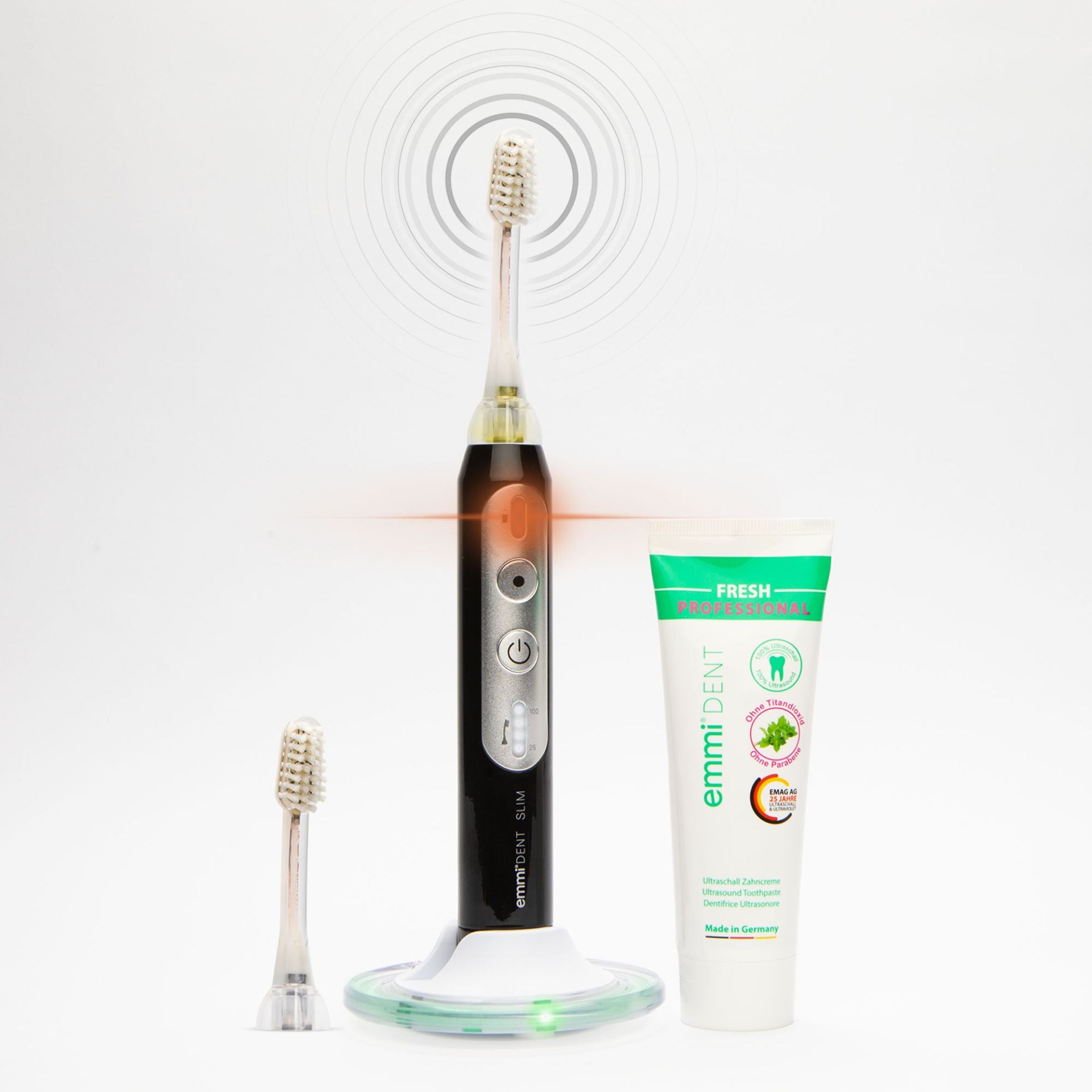
Gentle but consistent cleaning is the decisive approach here. The goal is to reduce bacterial plaque without additionally stressing the gums. This is exactly where our emmi-dent Slim ultrasonic toothbrush can provide meaningful support.
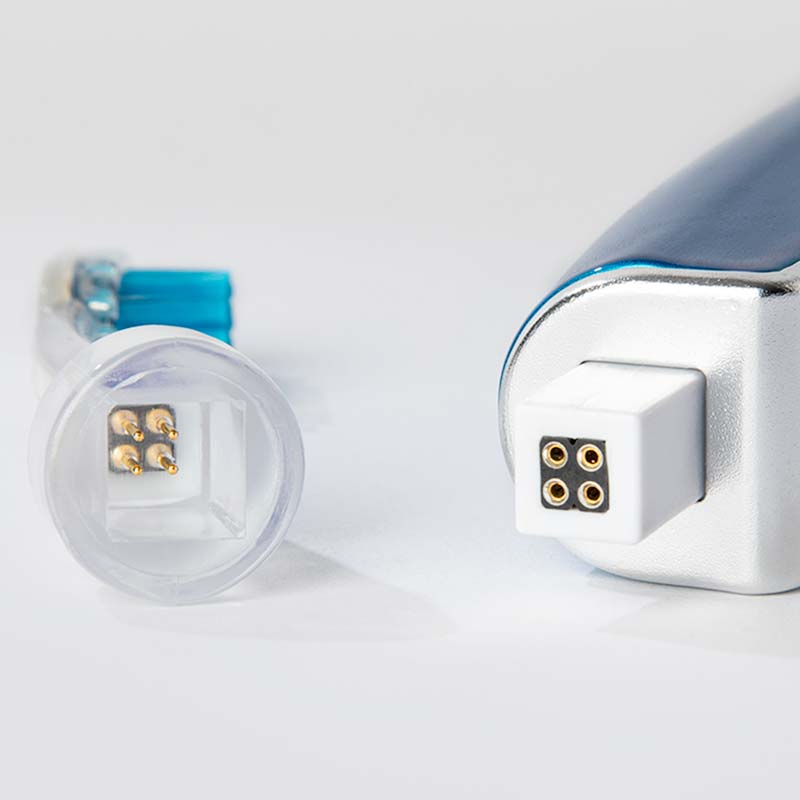
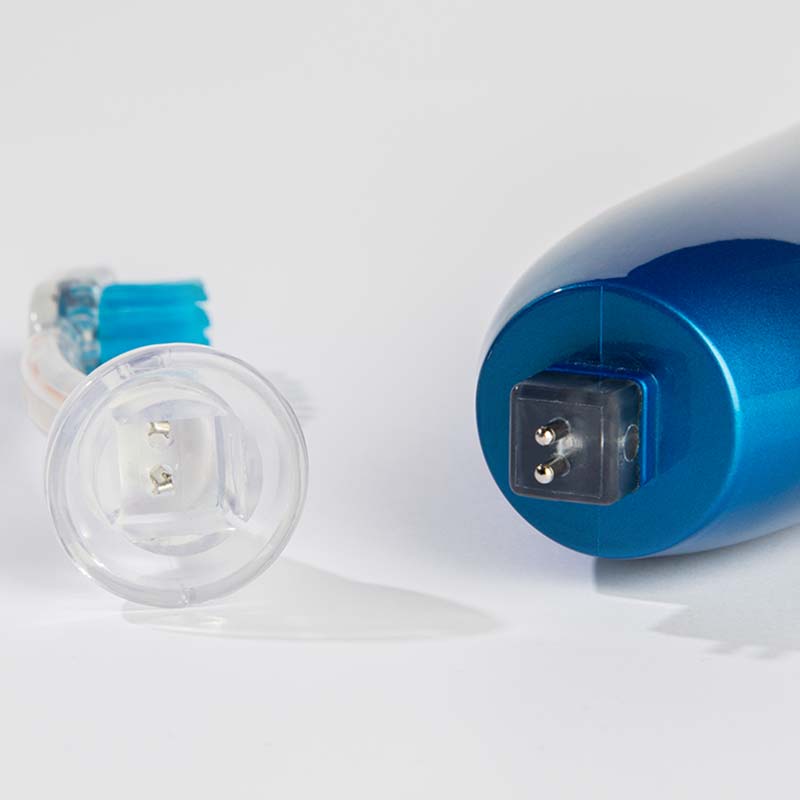
It works without classic mechanical movements and uses ultrasound to reduce bacteria even in hard-to-reach areas. This means that you can clean your teeth thoroughly without exerting additional pressure on your gums. Especially if your gums react sensitively or bleed easily, this type of cleaning can be a noticeable relief.
In addition, well-thought-out care concepts such as our emmi-dent Slim white teeth set or our emmi-dent Platinum Nature Set can help you structure your routine. It's not about using as many products as possible, but about building a care routine that logically complements each other and can be easily integrated into your daily life. If you perform your dental care consciously and regularly, you help your gums to calm down and remain stable.