









Many people eventually notice an uncomfortable feeling of tension in their gums. Some describe it as pressure, others as a sensitive pulling sensation or slightly irritated feeling along the teeth. This often occurs suddenly and quickly leads to uncertainty, especially if it is accompanied by bleeding gums or sensitive spots.
In this article, we explain why gums can feel tense or sensitive, what role inflammation, irritation, and the oral environment play, and when such changes might also indicate early gum recession. We also look at why sensitive gums don't always have to cause immediate pain and why many warning signs often seem rather inconspicuous in everyday life.
Why gums can feel sensitive or tense
Healthy gums normally feel inconspicuous. That's precisely why many people notice changes very quickly. A feeling of tension often arises when the gums are irritated or slightly inflamed. The cause is often bacterial plaque along the gum line.
This plaque forms anew daily and is called biofilm. If it remains for a longer period, the gums often react sensitively. They can swell slightly, feel tense, or bleed more easily when brushing. Especially in the early stages, many affected individuals initially only notice an unusual sensation in their mouth and not yet severe pain.
In addition, mechanical irritation can also play a role. Too much pressure when brushing, hard bristles, or aggressive scrubbing often strain the gums more than many people realize. The tissue then reacts sensitively and feels tense, especially along exposed tooth necks or irritated areas.
Dry oral mucous membranes, stress, hormonal changes, or nocturnal grinding can also make the gums more sensitive. This often results in an interplay of irritation, tension, and a slight inflammatory reaction.
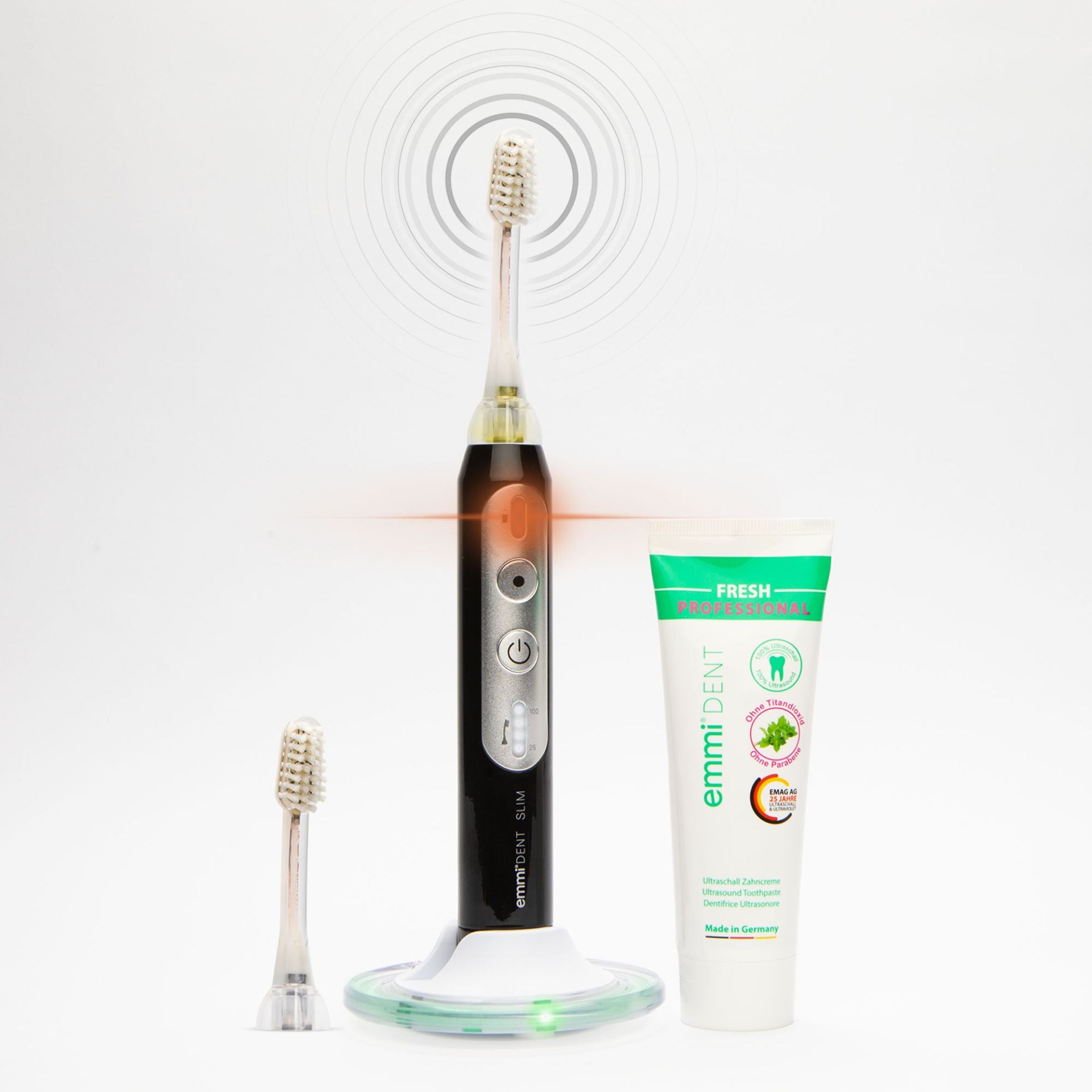
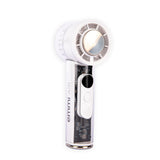
Sensitive gums, therefore, usually benefit from the gentlest possible cleaning. Our emmi-dent Slim ultrasonic toothbrush is used by many people as an aid to gently reduce bacterial plaque and clean sensitive areas without strong mechanical pressure.
When bleeding gums or gum recession may be behind it
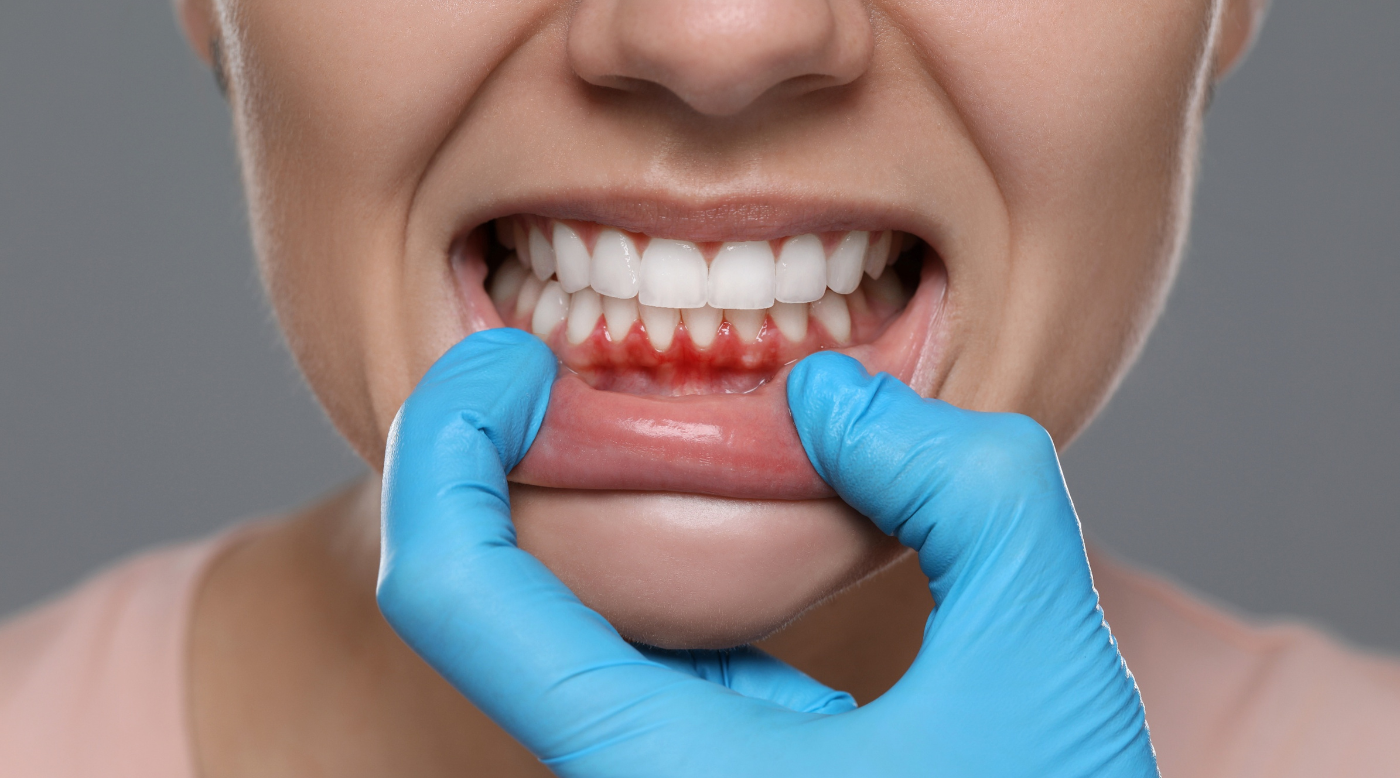
Bleeding gums are often underestimated, although they are frequently one of the first warning signs of irritated or inflamed gums. Many people initially think they simply "brushed too hard." In reality, however, this often indicates incipient inflammation due to bacterial plaque along the gum line.
If this irritation persists, the gums can slowly recede. This is precisely what is called gum recession. The teeth then often appear longer, more sensitive, or react more strongly to cold and heat. Some affected individuals also notice a feeling of tension or the sensation that the gums "no longer fit properly."
What is particularly insidious is that gum recession often progresses insidiously. Many changes develop over months or even years. Pain often only occurs later. It is therefore all the more important to take early warning signs seriously.
After stressful phases or with a weakened immune system, the gums often react more sensitively. The body then has a harder time compensating for bacterial stimuli, and minor inflammations occur more easily. In addition, smoking, dry mouth, or irregular dental care increase the risk.
Especially if symptoms such as bad breath, bleeding gums, or sensitive tooth necks also occur, a dental check-up should be carried out. Because the earlier inflammatory changes are detected, the better it is possible to prevent long-term damage to the gums.
What can really help sensitive gums in everyday life
Many people react to sensitive gums by brushing harder because they feel they need to clean the affected areas particularly thoroughly. However, precisely this can put additional strain on the irritated tissue.
More important is regular and at the same time as gentle as possible cleaning. The gum line plays a central role here, as bacterial plaque preferentially accumulates there. The interdental spaces are also often underestimated, although inflammation can easily develop precisely there.
In addition, many everyday factors influence the gums more strongly than most people realize. Too little fluid, stress, smoking, or a very sugary diet can change the delicate balance in the mouth and promote irritation.
Our emmi-dent ultrasonic toothbrushes are therefore often used as an aid when people want to clean their gums as gently as possible. Due to cleaning without strong scrubbing movements, many users find sensitive areas to be more pleasantly cared for.
Nevertheless, the following also applies here: Persistent bleeding gums, strong sensitivity, or visible gum recession should always be professionally clarified. Because gums often react very early to changes in the mouth, and precisely for this reason, it is worthwhile to take such warning signs seriously and not ignore them permanently.
Why sensitive gums often go unnoticed for a long time
Many people immediately think of severe pain or clearly visible inflammation when it comes to gum problems. However, this is often not the case. Sensitive or tense gums often develop insidiously and begin with rather inconspicuous changes in everyday life.
Typical, for example, is a slight pulling sensation when eating, a feeling of tension after brushing teeth, or the feeling that certain areas react more sensitively than usual. Some also notice that cold drinks suddenly become uncomfortable or that the gums bleed more easily when using dental floss.
Precisely these early warning signs are often suppressed or dismissed as temporary irritation. However, the gums often show very early on that the balance in the mouth is disturbed. Bacterial plaque along the gum line plays a major role here.
If this plaque persists, the tissue becomes increasingly sensitive. The body then tries to react to the bacteria, and precisely this causes feelings of tension, slight swelling, or irritated areas. Many people in this phase do not yet describe real pain, but rather an unpleasant feeling in the mouth.
In addition, the gums change with age. The tissue becomes more sensitive, recedes more easily, and reacts more sensitively to pressure or incorrect brushing technique. Hormonal changes or stress can also significantly affect the gums.
Stress, in particular, is often underestimated. Under tension, many people grind their teeth at night or unconsciously clench their jaw. This creates additional pressure on teeth and gums. At the same time, the immune system reacts more sensitively, and inflammation can occur more easily.
What role the oral environment plays for healthy gums
Healthy gums are closely related to a stable oral environment. In the mouth, saliva, mucous membranes, and natural bacteria normally work together to keep harmful germs in balance. If this balance is disturbed, the gums often react particularly sensitively.
Dry mouth, in particular, plays a larger role than many people think. Saliva not only helps with swallowing or speaking but also supports the natural cleaning of teeth and gums. If too little saliva is produced, bacterial plaque can adhere more easily.
Many people then simultaneously notice dry lips, an unpleasant taste, or a furry feeling in the mouth. Precisely these changes can be indications that the oral environment is out of balance.
Diet also influences the gums significantly more than many people realize. Frequent snacks, heavily sugary drinks, or acidic foods promote bacterial processes in the oral cavity. This permanently irritates the gums and makes them more sensitive.
At the same time, sensitive gums do not automatically mean poor dental hygiene. Some people naturally have more sensitive tissue or react more quickly to small changes in the oral cavity. The decisive factor is therefore not perfection, but rather consistent and gentle care.
Why brushing too hard often worsens the problem
When gums become sensitive or tense, many people instinctively react by brushing harder. This is usually based on the idea that the affected areas need to be cleaned particularly thoroughly. However, precisely this can lead to additional strain on the irritated tissue.
Too much pressure when brushing irritates the gums mechanically and can even contribute to gum recession in the long term. Particularly hard bristles or aggressive movements along the gum line are problematic.
Many people don't even notice how hard they are actually brushing. Especially electric toothbrushes are often used like manual toothbrushes and pressed onto the teeth with additional pressure. The gums often react to this with a feeling of tension, sensitivity, or small injuries.
In addition, irritated gums are often more sensitive to temperature. Cold air, hot drinks, or acidic foods are suddenly perceived much more strongly. Many affected individuals then have the feeling that their teeth or gums are "pulling."
Therefore, gentle and even cleaning is usually more sensible than excessive pressure. Especially along sensitive areas, many people today try to subject the gums to as little mechanical stress as possible.
Nevertheless, it always applies: If the gums are constantly tense, bleed regularly, or visible gum recession occurs, the cause should be professionally clarified. Because inflammatory changes in the oral cavity often develop slowly and remain unnoticed for a long time. Precisely for this reason, it is worthwhile to take early warning signs seriously and not react only when there is severe pain.